
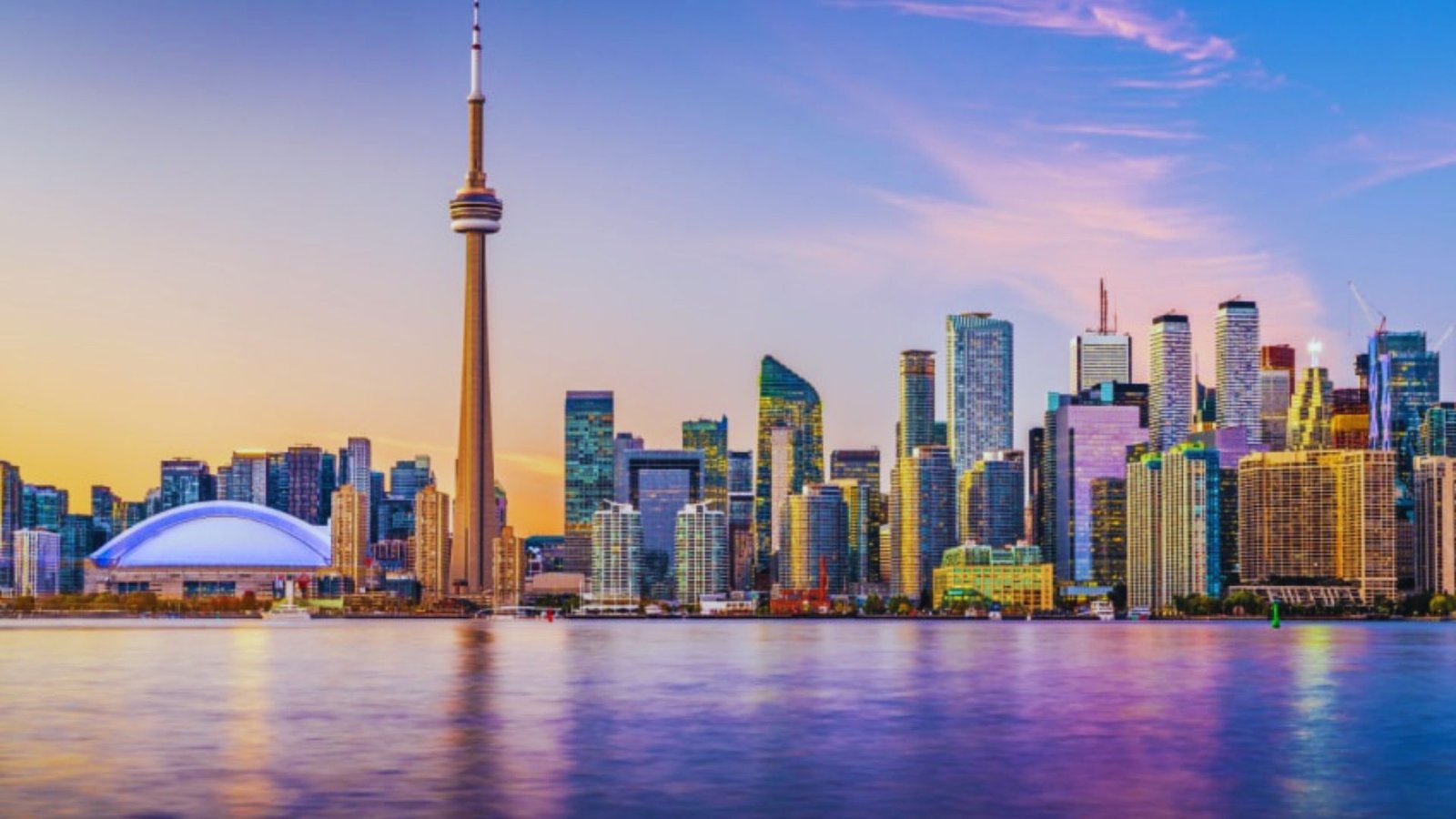





Planning a Toronto itinerary can feel overwhelming with so many options. I’ve visited Toronto multiple times, and I’m sharing exactly how to spend 3 to 4 days in this city without missing the best spots.
This guide covers downtown attractions, local neighborhoods, natural parks, and practical tips for getting around.
You’ll learn when to visit, where to stay, and how to build a schedule that fits your interests. No fluff, just real advice from someone who’s walked these streets.
Let’s make your Toronto trip smooth and memorable.
How to Plan the Perfect Toronto Itinerary
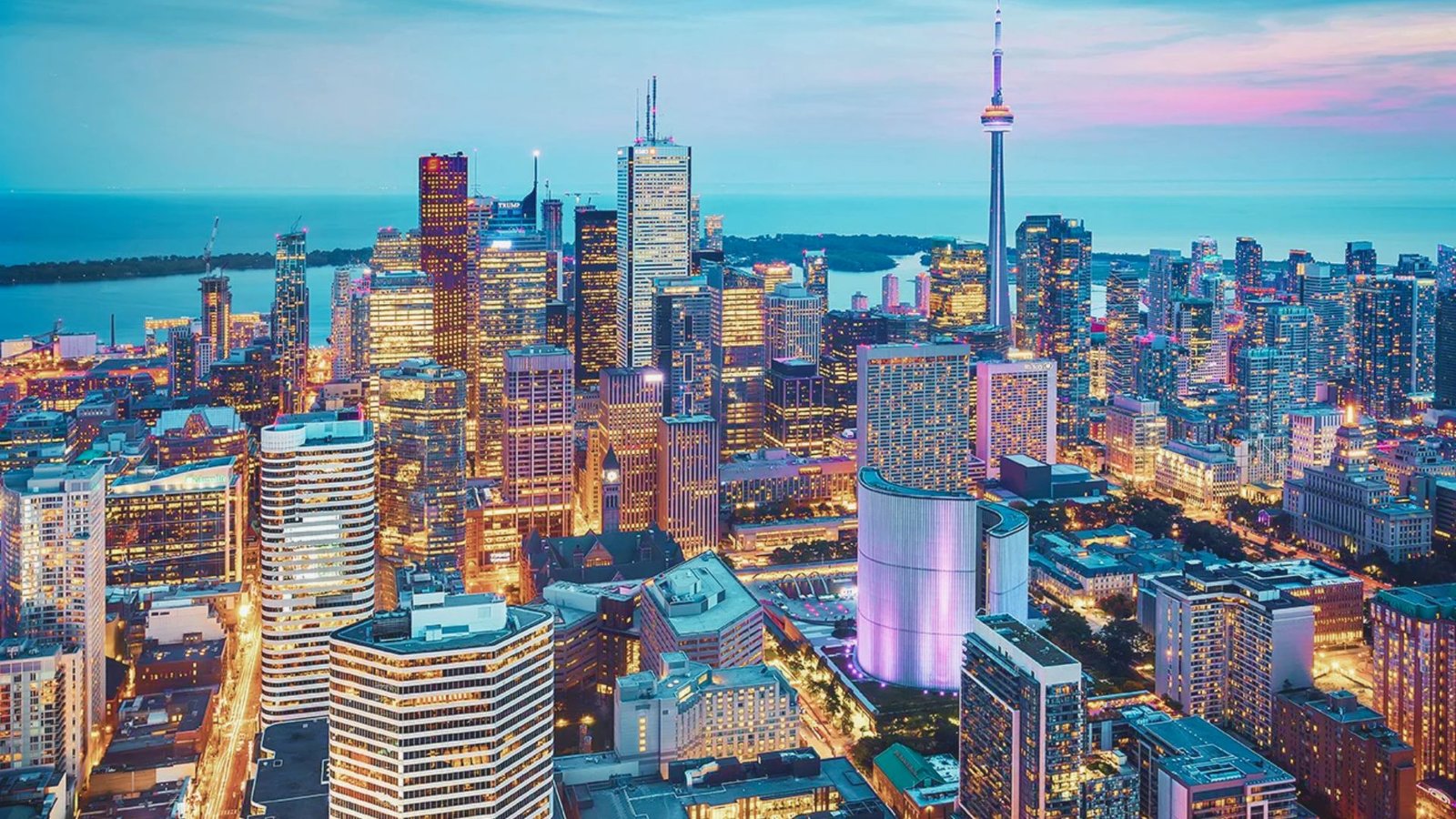
Start by picking your main interests. Toronto offers museums, parks, food scenes, and waterfront views.
List what matters most to you: Food and restaurants Museums and galleries Outdoor spaces Shopping districts Nightlife spots
Check the weather before you book. Summer brings festivals and warm weather. Fall offers colorful leaves in the parks. Winter can be cold, but indoor attractions stay busy.
Book accommodations near public transit. The subway and streetcars make getting around simple.
Reserve tickets online for popular spots like the CN Tower and Royal Ontario Museum. This saves time and money.
Best Time to Visit Toronto
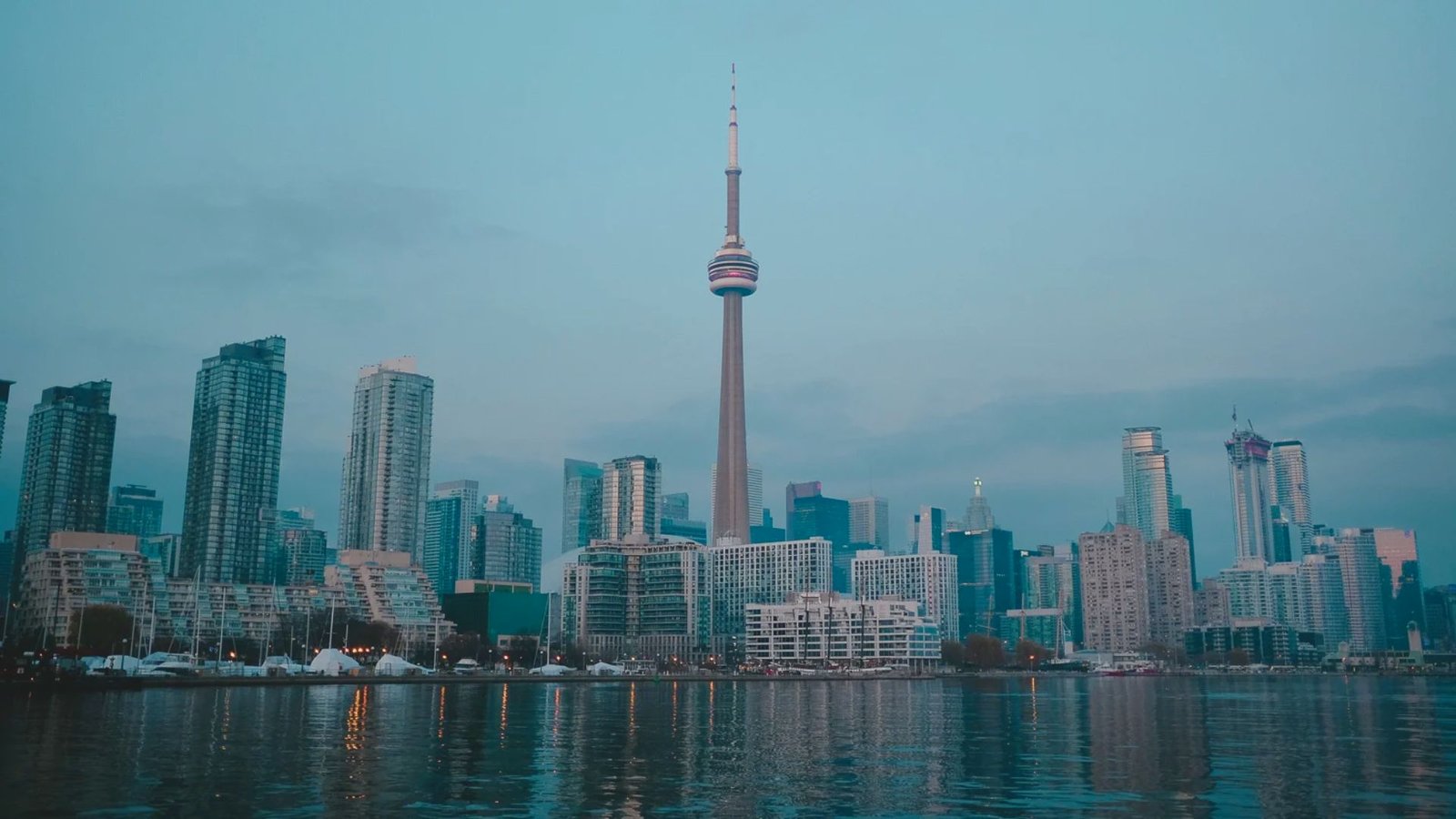
Late May to September works best for most visitors. The weather stays warm. Outdoor festivals happen weekly.
Spring (April to May) brings mild temperatures. Cherry blossoms bloom in High Park. Crowds stay smaller than summer.
Fall (September to October) offers comfortable weather. The trees in the parks turn red and orange. Hotel prices drop after Labor Day.
Winter (November to March) brings snow and cold. Indoor attractions like museums and markets stay open. Holiday lights brighten the city in December.
Avoid late March and early April if you want to skip rain and unpredictable weather.
How Many Days You Need in Toronto?
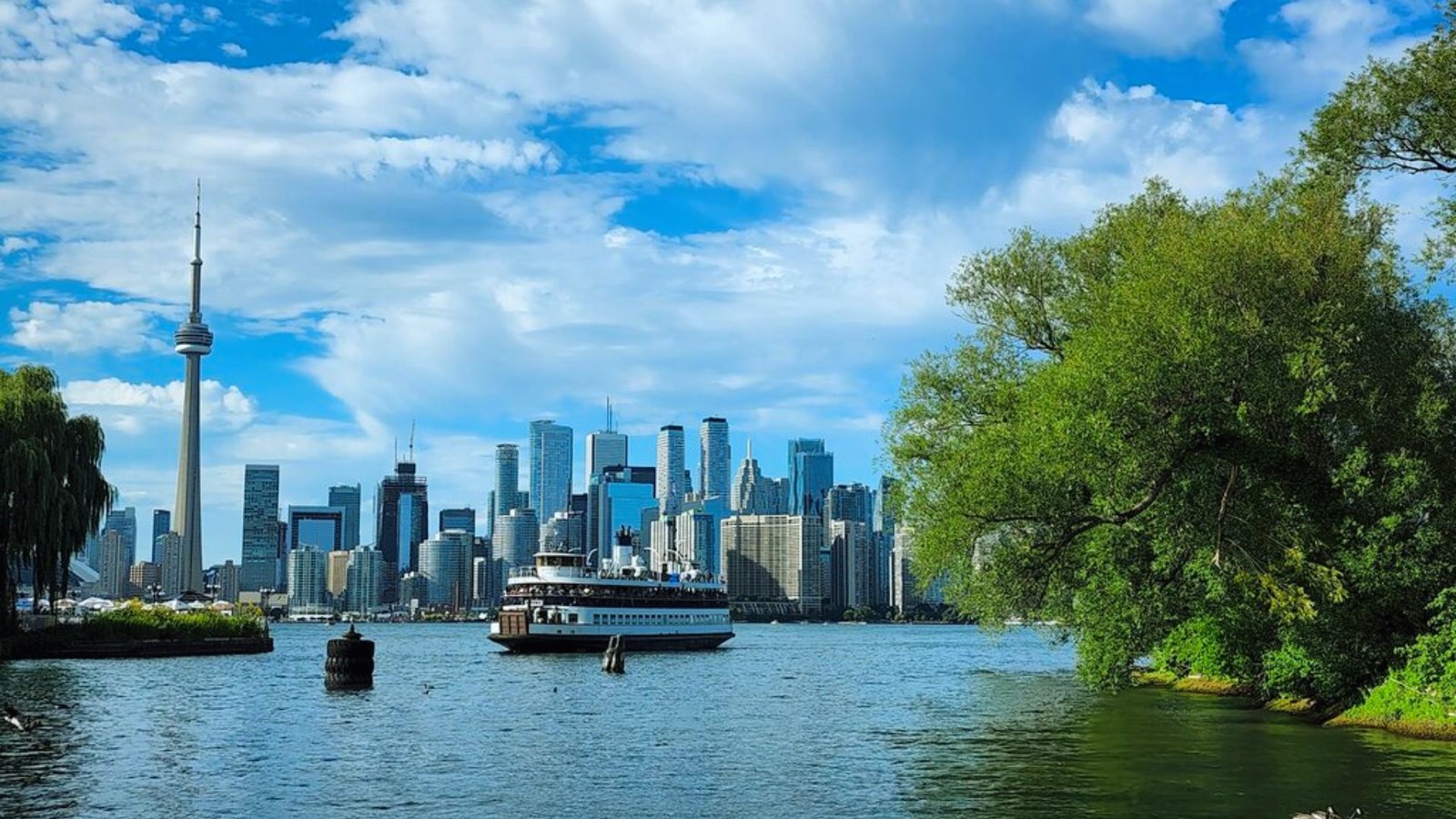
Three days covers the main attractions. You’ll see downtown landmarks, walk through neighborhoods, and visit at least one park or island.
Four days lets you slow down. Add a day trip or spend more time in specific areas. You can visit extra museums or try more restaurants.
One or two days feels rushed. You’ll miss neighborhoods and natural areas.
Five or more days works if you want to see everything. You can add trips to Niagara Falls or seek outer suburbs.
Tips for First-Time Visitors
Here are practical tips to make your Toronto visit smooth and stress-free.
- Buy a Presto card for public transit. Load it at subway stations. It works on buses, streetcars, and trains.
- Wear comfortable shoes. You’ll walk more than you think, even with transit.
- Toronto uses Canadian dollars. Credit cards work everywhere, but keep some cash for small vendors.
- Tipping follows standard rules. Leave 15-20% at restaurants. Round up for coffee or casual spots.
- Download the TTC (Toronto Transit Commission) app. It shows real-time arrivals and routes.
- Check restaurant hours before you go. Some places close between lunch and dinner.
- The city spreads out. Plan your days by neighborhood to save time on transit.
- Weather changes fast. Bring layers, even in summer.
Toronto Itinerary: 3 to 4 Day Travel Plan
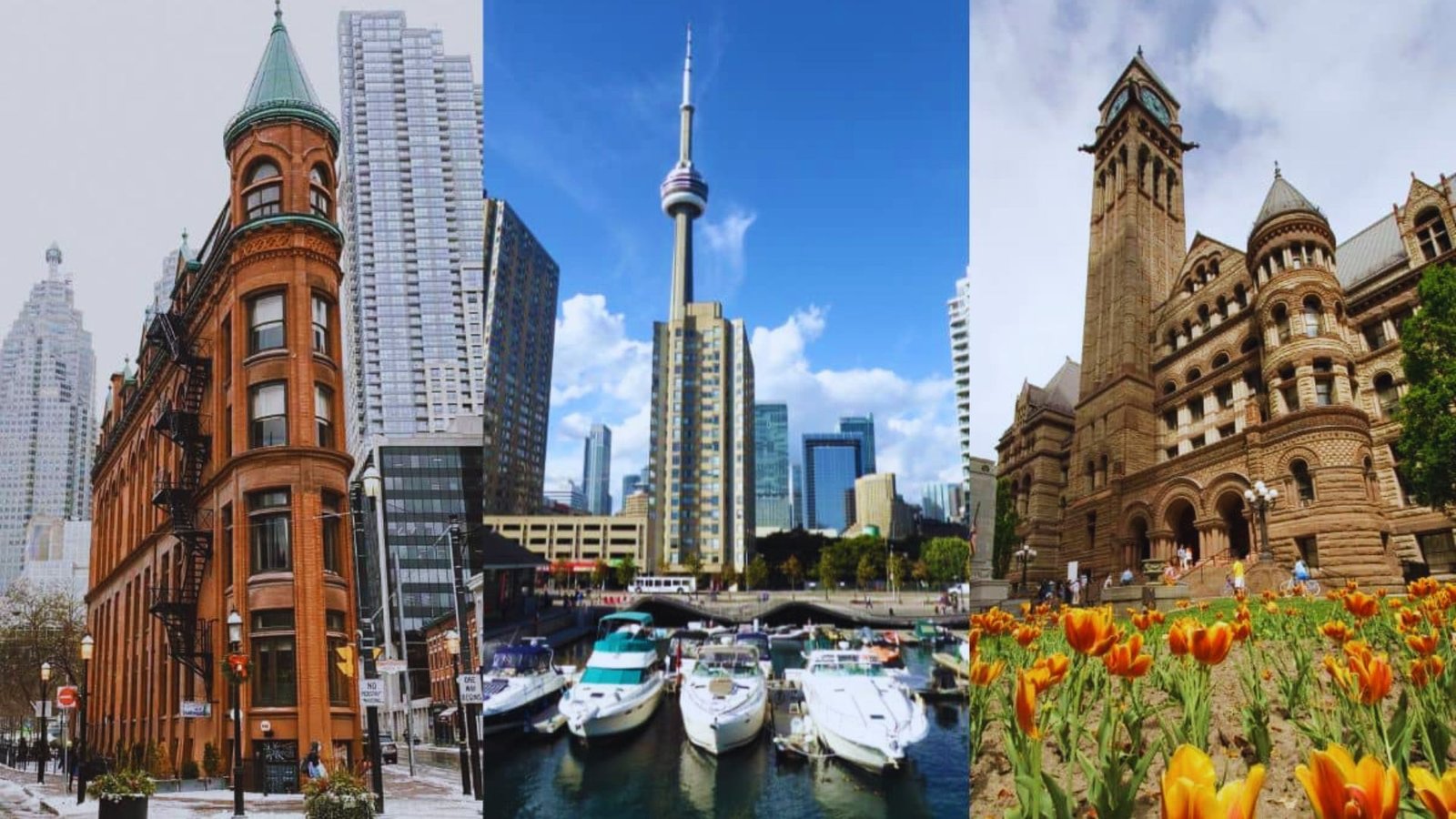
Here’s a day-by-day breakdown to help you see the best of Toronto.
Day 1: Downtown Toronto
Start in the city center with landmarks, museums, and waterfront attractions.
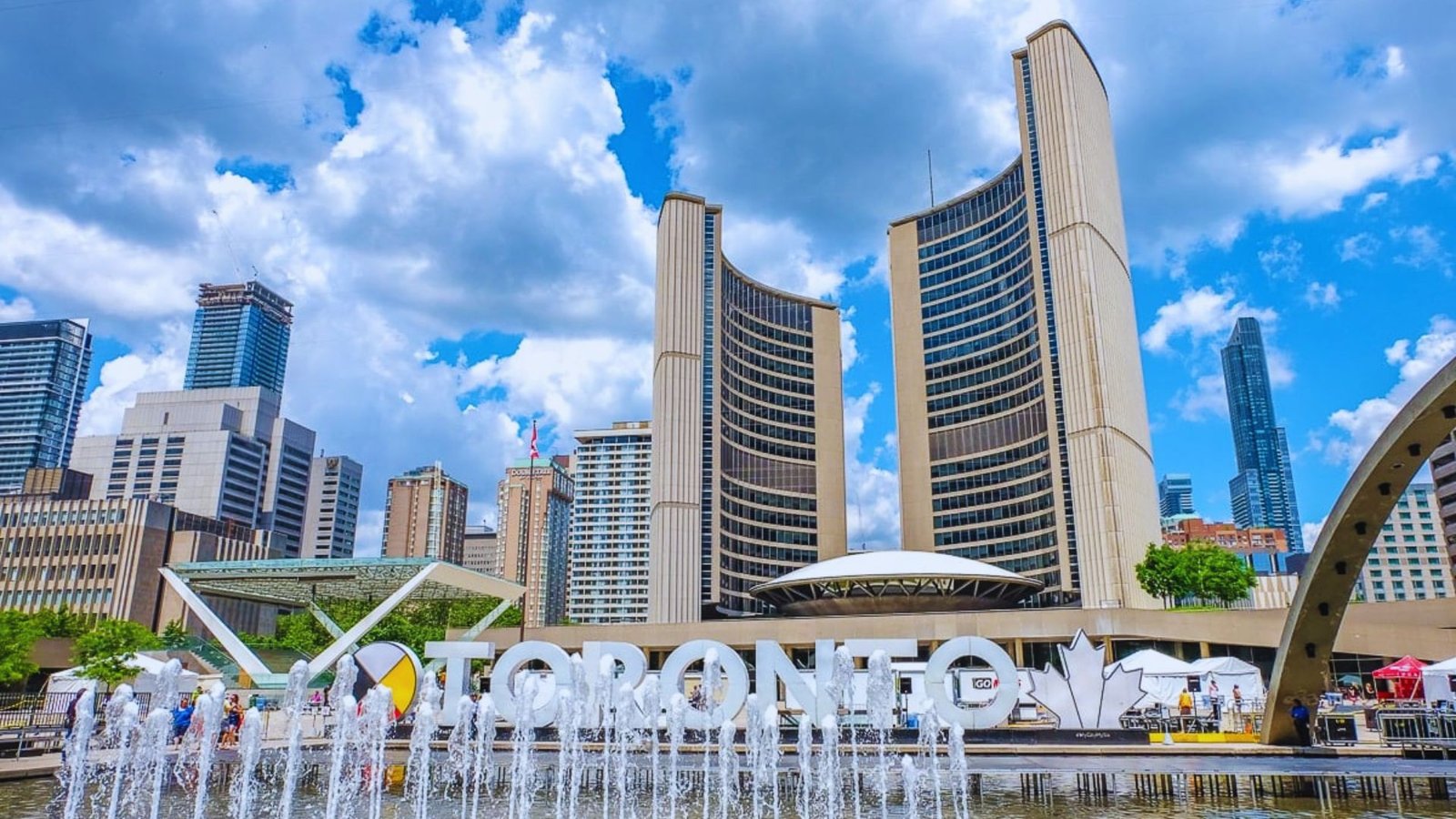
Nathan Phillips Square has the TORONTO sign and City Hall. Ice skating in winter, concerts in summer. Spend 20-30 minutes here.
The AGO sits 10 minutes west. Adult tickets cost $25. Free on Wednesday evenings. Plan 1.5 to 2 hours inside.
Chinatown sits next to the AGO. Try dim sum or noodle soup for $10-15. Arrive before 12:30 or after 1:30 to avoid waits.
Kensington Market sits one block west. Colorful houses, vintage shops, and food stands. Spend 1-2 hours. No admission fees.
Casa Loma offers castle views ($35). St. Lawrence Market has food stalls (free, best on Saturdays). Graffiti Alley provides free photos.
CN Tower admission starts at $40. Ripley’s Aquarium costs $45. Harbourfront is free. Pick one or two.
The Entertainment District has theaters near King Street. Queen Street West offers bars and live music. King West features upscale dining.
Day 2: Walk Through Toronto’s Neighborhoods
Mid-town areas with museums, university campus, and local dining spots.
Yorkville has upscale shops and restaurants. Brunch costs $20-30 per person. Walk along Cumberland Street after eating.
The library on Yonge Street is free. Fifth floor has city views. Spend 30-45 minutes.
Walk through King’s College Circle. Buildings date to the 1800s. Stop at Hart House (free). Plan 45 minutes to an hour.
ROM has dinosaurs and history. Tickets around $23. Takes 2-3 hours. Gardiner Museum focuses on ceramics. Tickets $15. Takes 1-1.5 hours.
Bloor Street has Korean, Japanese, Middle Eastern, and Italian food. The Annex has student-friendly spots. Koreatown offers Korean BBQ.
Bata Shoe Museum costs $14 (45 minutes). Spadina Museum costs $10 (one hour). Or take a coffee break.
Ossington Avenue has restaurants and bars. Trinity Bellwoods Park is nearby (free). Most restaurants don’t need reservations on weeknights.
Day 3: Natural Attractions
Choose one option based on weather and interests.
The ferry costs $9 round-trip. Islands have beaches, bike paths, and picnic areas. Rent bikes for $10-15 per hour. Half day minimum. Pack snacks.
High Park has trails, gardens, and a free zoo. Cherry blossoms bloom late April or early May. Spend 2-3 hours. Waterfront Trails run along Lake Ontario. Combine both for a full day.
Don Valley Park has hiking trails. Bring water and proper shoes. Evergreen Brickworks has a Saturday farmers market (8 AM to 1 PM). Free admission. Free shuttle from Broadview subway on weekends.
The Beaches has shops, cafes, and a boardwalk. Swimming beaches open in summer. Take streetcar 501 to Woodbine Avenue.
The Distillery District has Victorian buildings and galleries. Free to walk. It gets crowded in the afternoons.
Day 4: Customize Your Experience
The Junction has breweries on Dundas Street West. Leslieville has antique shops on Queen Street East. Liberty Village features modern condos. Roncesvalles Village has Polish cafes and delis.
Book food tours through Kensington Market or St. Lawrence Market. Plan cafe routes across neighborhoods. Toronto has Korean, Indian, Caribbean, Italian, and Middle Eastern food scenes.
Aga Khan Museum ($20, 1.5-2 hours). Ontario Science Centre ($22, closed for renovations). St. James Cathedral (free). Graffiti Alley (free). Toronto Music Garden (free waterfront park).
Niagara Falls is 1.5 hours by car. Coach buses run daily. Niagara-on-the-Lake has wineries. Hamilton has waterfalls (45 minutes). Stratford has theater shows (1.5 hours, April to October).
Getting Around Toronto
The TTC runs subways, streetcars, and buses. Line 1 (yellow) runs north-south. Line 2 (green) runs east-west. Both meet at Bloor-Yonge station.
Buy a Presto card at subway stations ($3.30 per ride). Day passes cost $13.50 (unlimited rides). Transfers are free within two hours. Subways run 6 AM to 1:30 AM on weekdays.
Downtown blocks are short. Many attractions sit within 10-20 minutes on foot.
Bike Share Toronto costs $7 per day pass. First 30 minutes included. Private rentals near High Park and Toronto Islands cost $15-30. Toronto CityPASS costs $110 (five attractions).
Saves money if you visit four or more spots. Valid for nine days.
Where to Stay in Toronto
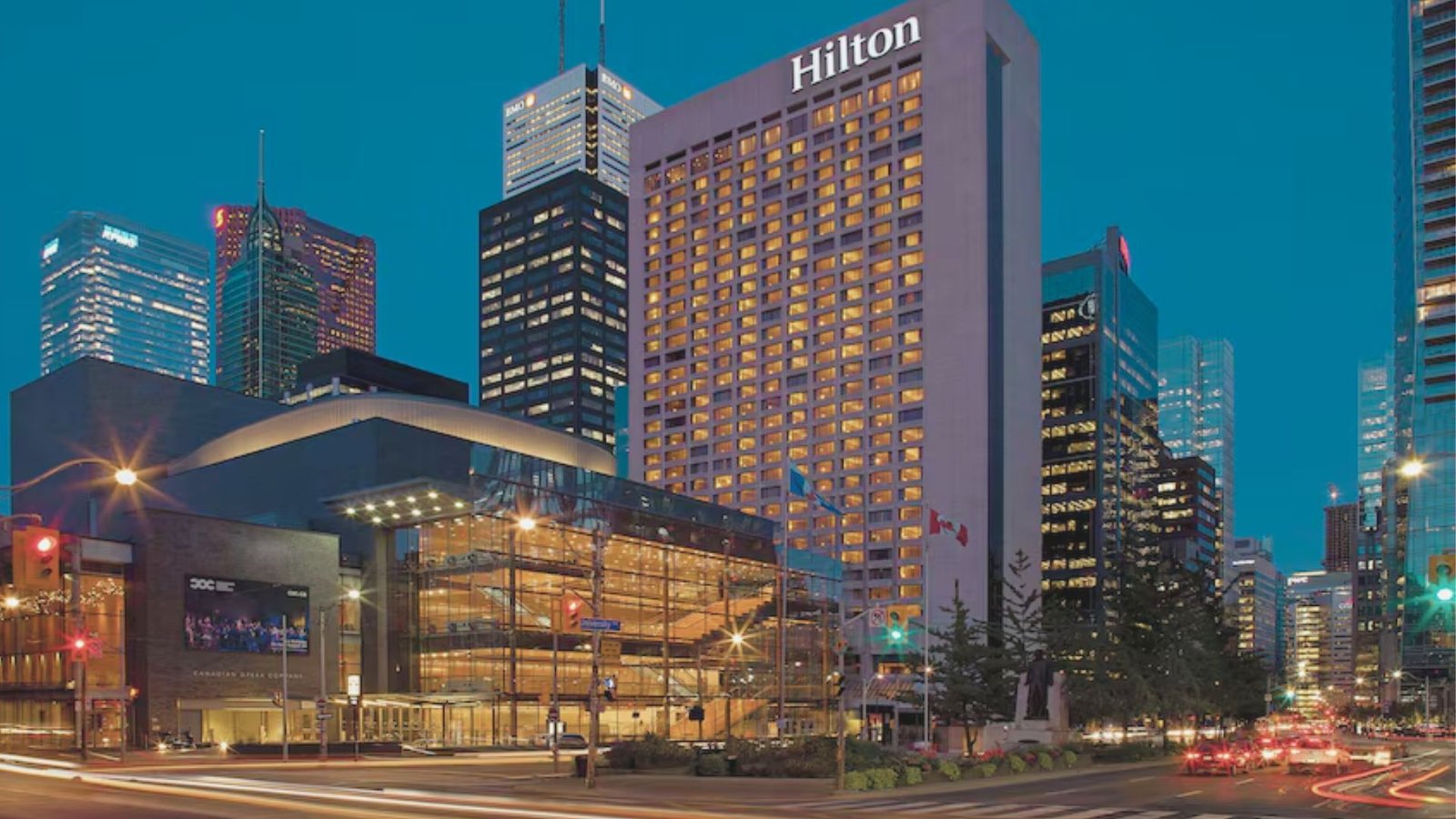
Downtown Core sits near Union Station. Close to CN Tower, Harbourfront, and Entertainment District. Transit access is excellent. Yorkville offers upscale hotels near ROM and Bloor Street.
Quieter than downtown. The Entertainment District sits near King Street West. Theater and nightlife nearby. Can be loud on weekends.
The Annex is near the University of Toronto. More residential feel. Budget-friendly options available. Liberty Village sits west of downtown. Modern hotels and condos. Less central but cheaper.
Downtown stays minimize transit time. You can walk to many attractions. Hotels cost more but save time. Neighborhood stays offer lower prices and local vibes.
Areas like Leslieville, Roncesvalles, or The Junction have Airbnb options. Book near a subway line to stay connected to downtown attractions.
Conclusion
I’ve spent multiple trips fine-tuning this Toronto itinerary, and I know these three to four days will help you see the city without feeling rushed.
Pick the attractions that match your interests, use public transit to save time, and don’t skip the neighborhoods.
Toronto reveals itself in small moments between the big sights. Start planning your dates, book accommodations near transit, and get ready to walk.
Drop a comment if you have questions about specific spots or need help adjusting the schedule. I’d love to hear which parts of the city you’re most excited to visit.
Frequently Asked Questions
Is 3 Days Enough for Toronto?
Three days covers downtown landmarks, main museums, and one outdoor area. You’ll miss some neighborhoods. Four days lets you slow down and see more without rushing through the city.
What Should I Skip in Toronto?
Skip the CN Tower if you’re afraid of heights or on a tight budget. Skip Casa Loma if historic houses don’t interest you. Winter visitors can skip the islands since ferries run less and it’s cold.
How Walkable is Toronto?
Downtown is very walkable. Most attractions sit within 20-30 minutes of each other on foot. Outer neighborhoods need transit or bikes. Winter walking gets harder with snow and cold from December to March.
Do I Need a Car in Toronto?
No. Public transit, bikes, and walking cover most attractions. A car adds parking costs ($20-40 daily) and traffic stress. Rent one only for day trips to Niagara Falls or outside the city.
When Do Cherry Blossoms Bloom in Toronto?
Late April or early May, depending on spring weather. High Park gets extremely crowded during bloom season. Visit early morning or on weekdays to avoid the biggest crowds.