
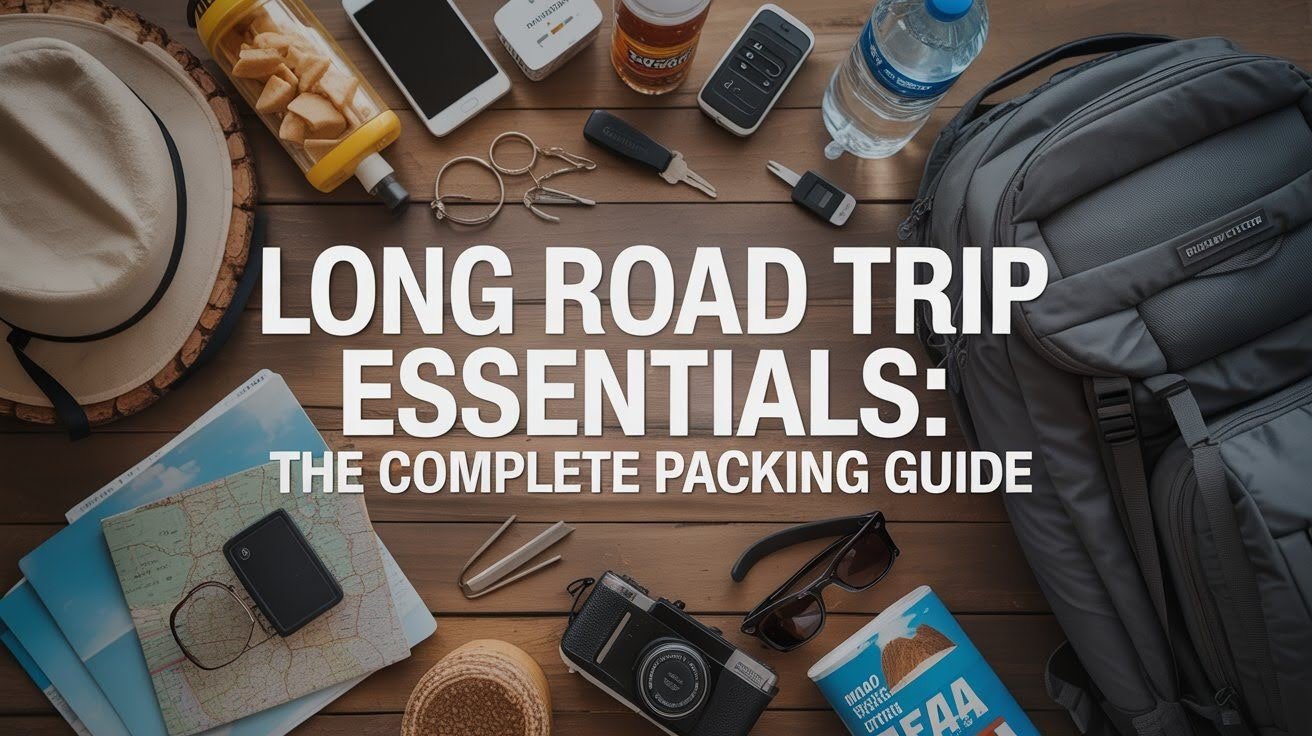







I’ll never forget my first long road trip. Three hours in, my phone died, I had no snacks, and my back was killing me. I learned the hard way that good planning makes all the difference.
Trust me, packing the right essentials isn’t just about being prepared. It’s about making your trip actually enjoyable instead of stressful.
That’s why I created this guide with 41 items I wish I’d known about before my early road trips.
We’ll cover safety gear, comfort items, tech gadgets, snacks, and organization tools.
Let’s make sure your road trip is one you’ll remember for all the right reasons.
How to Pack Smart for a Long Road Trip?

I used to throw everything in my car the night before trips. Now I plan at least a week ahead, and it makes a huge difference.
Start with a master packing list on your phone and update it after each trip. Check the weather for every stop along your route because conditions can change fast.
Think about your specific drive too, highway versus backroads needs different items. Know your vehicle’s space limits before packing.
My best advice? If you’re unsure you’ll use something, leave it home. Pack for comfort, but keep it simple.
List of 41 Long Road Trip Essentials
These items cover safety, comfort, tech, food, and organization to keep your trip running smoothly from start to finish.
Car Safety & Emergency Essentials

- Spare tire, jack & lug wrench: You never know when you’ll get a flat tire. Make sure your spare is properly inflated before you leave. Check that your jack and lug wrench actually work with your vehicle’s setup.
- Portable jump starter or jumper cables: Dead batteries happen at the worst times. A portable jump starter lets you fix the problem yourself without waiting for help. If you go with cables, make sure they’re heavy-duty and long enough.
- Roadside emergency kit: Get a kit with flares, reflective vest, flashlight, and basic tools. These items can keep you safe if you break down on a busy highway. Store it somewhere you can reach easily from the driver’s seat.
- Tire pressure gauge: Properly inflated tires improve gas mileage and prevent blowouts. Check your pressure every morning during long trips. Gas station gauges aren’t always accurate, so bring your own reliable one for peace of mind.
- Car tool kit: Basic tools like screwdrivers, pliers, and wrenches can fix minor issues on the road. You don’t need a full mechanic’s setup. Just enough to tighten loose parts or make small adjustments when needed.
- Reflective warning triangle: If you break down, this alerts other drivers to slow down and move over. Place it at least 100 feet behind your car. It’s required by law in some states and could prevent a serious accident.
- Driver’s license, vehicle documents & insurance papers: Keep these in your glove box or a dedicated folder. You’ll need them if you’re pulled over or in an accident. Make digital copies too and save them on your phone as backup.
Health & Hygiene Essentials

- First-aid kit: Stock it with bandages, antiseptic wipes, pain relievers, and any personal medications. Road rash, headaches, and small cuts happen. Having supplies on hand means you won’t need to find a pharmacy in an unfamiliar town.
- Prescription medications: Bring enough for your entire trip plus a few extra days. Keep them in original bottles with labels. Pack them in your carry bag, not the trunk, so they’re accessible during rest stops.
- Hand sanitizer & disinfecting wipes: Gas pumps, rest stop doors, and fast food restaurants are covered in germs. Clean your hands before eating and wipe down surfaces in your car. A small bottle goes a long way for staying healthy.
- Face wipes or body wipes: These are lifesavers when you can’t shower for a day. Use them to freshen up after a long drive or before checking into your hotel. They take up minimal space but make you feel so much better.
- Travel toiletries (toothbrush, toothpaste, deodorant, etc.): Pack travel-sized versions to save space. Include basics like toothbrush, toothpaste, deodorant, and any skincare items you use daily. Don’t forget sunscreen if you’ll be outside at stops along the way.
Navigation & Tech Essentials

- Smartphone with offline maps: Download your route before leaving in case you lose cell service. Apps like Google Maps let you save entire regions offline. This has saved me more times than I can count in remote areas.
- GPS device (backup): Your phone might die or lose signal at the worst moment. A dedicated GPS doesn’t rely on cell towers. It’s old school, but it works when everything else fails on unfamiliar roads.
- Multi-port car charger: Everyone’s devices die at different times on long trips. Get a charger with at least three USB ports. This way, passengers can charge phones, tablets, and cameras all at once without fighting over one outlet.
- Portable power bank: This charges your phone when the car is off or you’re away from the vehicle. Get one with at least 10,000mAh capacity. I keep mine charged and ready because you never know when you’ll need extra battery life.
- Dashcam: A dashcam records everything that happens on the road. It protects you in accidents by providing clear video evidence. Some models even record when your car is parked, which helps with hit-and-runs or vandalism.
- Aux cable / Bluetooth adapter: Not all cars have Bluetooth built in. An aux cable or adapter lets you play your music and podcasts through the car speakers. Much better than relying on scratchy radio stations in the middle of nowhere.
- Pre-downloaded playlists, podcasts & movies: Streaming eats up data and doesn’t work without service. Download everything before you leave. Create playlists for different moods and save podcast episodes for when the scenery gets boring.
Comfort & Personal Care Essentials

- Travel pillow: Long drives make your neck stiff and sore. A good travel pillow supports your head during passenger naps. Memory foam ones are worth the extra cost because they actually provide comfort on bumpy roads.
- Seat cushion for long drives: Hours in the car can hurt your back and tailbone. A cushion with good support makes a huge difference. Look for ones with gel or memory foam that distribute your weight evenly.
- Lightweight travel blanket: Cars get cold when the AC is running or you’re driving through mountains. A compact blanket keeps passengers warm without taking up trunk space. Bonus points if it’s machine washable for easy cleaning.
- Eye mask: If you’re rotating drivers, a good eye mask helps you sleep during the day. It blocks out light completely so you can rest while someone else handles the wheel. Essential for early morning or late night drives.
- Sunglasses (preferably polarized): Bright sun and glare off the road can cause eye strain and headaches. Polarized lenses reduce glare better than regular sunglasses. Keep an extra pair in case you lose or break your main ones.
- Comfortable clothes for layering: Temperatures change as you drive through different areas and altitudes. Pack layers you can add or remove easily. Think t-shirts, hoodies, and a light jacket instead of one heavy coat.
- Jacket or raincoat: Weather can turn bad without warning, especially in mountainous areas. A waterproof jacket protects you during gas stops and roadside emergencies. Get one that packs small so it doesn’t take up valuable space.
- Comfortable driving shoes: Your regular shoes might look good but can cramp your feet after hours of driving. Bring shoes with good arch support and flexibility. Slip-ons work great because they’re easy to take off during breaks.
Food, Snacks & Hydration Essentials

- Reusable water bottle: Staying hydrated keeps you alert and prevents headaches. A reusable bottle saves money and reduces plastic waste. Get one that fits your cup holder and keeps drinks cold for several hours.
- Cooler for drinks & snacks: A small cooler keeps perishable snacks fresh and drinks cold for the whole trip. Pack it with ice packs, not loose ice, to avoid messy spills. It beats stopping at expensive gas stations every few hours.
- Healthy snacks (protein bars, nuts, fruits): Skip the candy and chips that make you crash later. Pack protein bars, mixed nuts, dried fruit, and fresh apples. These keep your energy steady and won’t make you feel sluggish behind the wheel.
- Reusable cutlery & napkins: Plastic utensils break easily and create waste. Bring a set of reusable forks, spoons, and cloth napkins. They’re better for the environment and actually work when you’re eating takeout in your car.
- Trash bags or disposable waste bags: Your car will get messy with wrappers, bottles, and food containers. Keep a small trash bag hooked on the back of a seat. Empty it at every gas stop to avoid living in rolling garbage.
Organization & Storage Essentials

- Trunk organizer: A trunk organizer keeps everything in place so items don’t roll around. Use compartments for tools, snacks, and emergency gear. It makes finding what you need so much easier than digging through a messy trunk.
- Backseat organizer: These hang on the back of front seats and hold tablets, snacks, and small items. Great for keeping kids’ stuff accessible and organized. Also works as a barrier to stop things from falling into the footwell.
- Zip bags or packing cubes: Group similar items together in labeled bags or cubes. One for toiletries, one for electronics, one for documents. This system saves time when you need something specific and keeps your car organized.
- Extra tote bag or foldable bag: You’ll pick up souvenirs, groceries, or random items along the way. A foldable bag takes up almost no space but expands when needed. Keep it accessible for impromptu shopping stops or beach visits.
Useful Extras & Entertainment Essentials

- Travel umbrella: Rain happens, especially on multi-day trips through different climates. A compact umbrella fits in your door pocket or under a seat. You’ll be grateful when you need to pump gas in a downpour.
- Multi-tool or Swiss knife: These solve so many small problems on the road. Opening packages, cutting food, tightening screws, opening bottles. Get one with scissors and a bottle opener at minimum. Just don’t pack it in carry-on if flying.
- Travel journal or notebook: Write down memories, interesting stops, or funny moments from the trip. I love looking back at my road trip notes years later. A small notebook and pen take up no space but capture experiences phones can’t.
- Books, games, or entertainment for kids/adults: Long stretches of highway get boring for passengers. Bring card games, travel-sized board games, or books. Audiobooks work great too because everyone can listen together without needing to look at screens.
- Cash & coins for tolls and small purchases: Not every toll booth takes cards, and some small towns are cash-only. Keep at least $50 in small bills and quarters. You’ll also need coins for parking meters and vending machines.
Expert Tips for a Smooth Long Road Trip
- Use a hanging trash bag and empty it at every gas stop. Wipe down surfaces with disinfecting wipes daily to prevent dirt and grime buildup.
- Take a 15-minute break every two hours to stretch and walk around. Switch drivers when possible and never push through exhaustion.
- Start early in the morning to avoid traffic and afternoon heat. Late evening drives work too, but make sure you’re well-rested first.
- Fill up when your tank hits half to avoid running low in remote areas. Use apps to find the cheapest gas prices along your route.
- Map out rest areas every 100 miles so you know where to take breaks. Look for spots with clean bathrooms and safe parking areas.
Conclusion
Packing smart makes all the difference between a stressful trip and one you’ll actually remember fondly. I’ve learned this through plenty of trial and error on the road.
This list of 41 essentials gives you a solid starting point, but feel free to adjust it based on where you’re going and how long you’ll be gone. A weekend trip needs less than a cross-country drive.
Save this checklist for your next road trip and share it with friends who are planning their own drives. Safe travels, and I hope your road trip is everything you want it to be.
Frequently Asked Questions
What are the most important items to pack for a long road trip?
Safety items come first, including a spare tire, jump starter, and emergency kit. After that, focus on comfort items like pillows, snacks, water, and phone chargers to make the drive more enjoyable.
How can I keep my car organized during a road trip?
Use a trunk organizer and backseat organizer to keep everything in its place. Bring a small trash bag and empty it at every stop to prevent clutter from building up.
What snacks are best for long drives?
Pack protein bars, mixed nuts, dried fruit, and fresh apples that won’t make you crash later. Avoid sugary snacks and heavy foods that can make you feel tired or sluggish behind the wheel.
How often should I take breaks during a long road trip?
Stop every two hours for at least 15 minutes to stretch your legs and walk around. This helps prevent fatigue and keeps you alert, which is important for safe driving on long stretches.
Do I really need a physical map if I have my phone?
A backup GPS device or physical map is smart in case your phone dies or loses signal. Remote areas often have poor cell service, so having an alternative navigation option can save you from getting lost.