
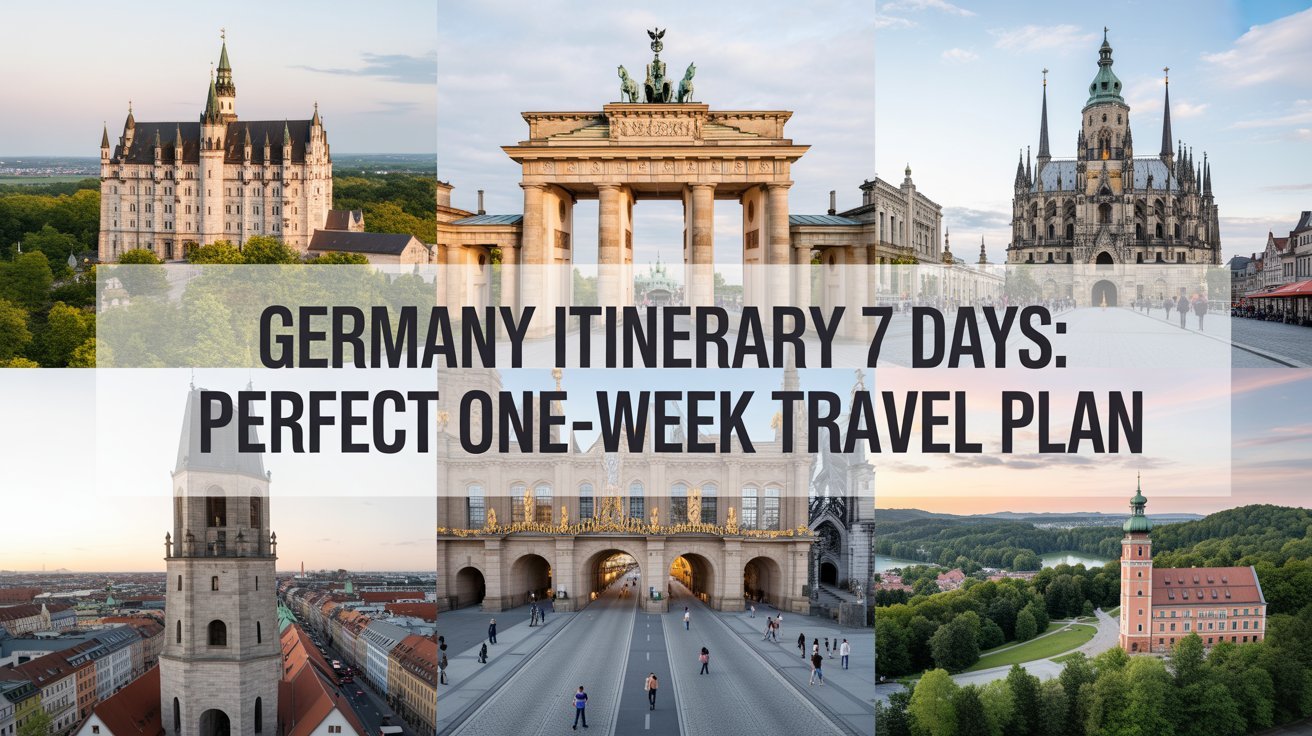





Planning a Germany itinerary 7 days trip can feel overwhelming with so many beautiful cities to visit. I’ve mapped out the perfect week that takes you from Munich’s beer halls to Berlin’s historic sites, including the stunning Bavarian Alps and fairytale castles along the way.
This guide solves your planning stress by giving you a complete day-by-day route that covers transportation, must-see attractions, and local experiences.
You’ll learn exactly where to go, what to see, and how to make the most of your time without rushing or missing key highlights.
This itinerary balances culture, history, and natural beauty for an unforgettable German experience that works for first-time visitors and returning travelers alike.
How to Plan a 7-Day Germany Trip

Planning your week in Germany starts with choosing between driving for village access or trains for quick city connections.
Tours handle logistics while independent travel offers flexibility. Mix both by booking day tours in specific cities.
Spring and fall offer comfortable temperatures with fewer crowds. Summer brings long daylight and festivals but more tourists.
Winter adds snow to Bavaria and milder weather up north. Pack layers since weather changes quickly.
City center hotels put you near attractions while countryside stays offer peaceful settings at lower prices. Small guesthouses provide personal service and insider tips. Boutique hotels blend design with modern amenities.
Both often include homemade breakfasts with regional specialties.
Day-by-Day Germany Itinerary
This week-long trip takes you through Germany’s most captivating regions, from Bavarian culture to alpine peaks and historic cities.
Day 1: Arrival in Munich

Start at Marienplatz where the famous Glockenspiel performs daily at 11 am and noon. The Gothic Frauenkirche cathedral towers stand just steps away. Visit Viktualienmarkt food market to sample local specialties like Leberkäse.
Choose between Alte Pinakothek for European art or Deutsches Museum for science exhibits. End your evening at Hofbräuhaus beer hall with live oompah bands or catch a classical concert.
Day 2: Munich Palaces & Gardens

Tour Residenz Palace with its opulent rooms or Schloss Nymphenburg’s baroque architecture and gardens. Visit Neue Pinakothek for 19th-century art or Lenbachhaus for Blue Rider paintings.
Spend afternoon at Englischer Garten, bigger than Central Park. Watch surfers at Eisbach, then relax at a beer garden under chestnut trees.
Day 3: Bavarian Alps & Garmisch-Partenkirchen

Take the cog railway or cable car to Zugspitze, Germany’s highest mountain at nearly 3,000 meters. Clear days offer views across four countries. Hike through alpine meadows dotted with wildflowers or circle mountain lakes.
The town offers charming painted houses and cozy restaurants. Try Käsespätzle or Schweinshaxe for dinner.
Day 4: Füssen & Neuschwanstein Castle

Visit Neuschwanstein Castle perched on a rugged cliff with turrets rising above the forest. Book tickets weeks in advance. The 30-minute uphill walk offers beautiful views.
Tour nearby Hohenschwangau Castle where King Ludwig II spent his childhood. Stroll medieval Füssen’s cobblestone streets and dine at a traditional Weinstube.
Day 5: Cologne & the Rhine

Cologne Cathedral soars 157 meters high with intricate Gothic details. Climb 533 steps for Rhine River views. Take a Rhine River cruise past vineyards, medieval castles, and villages.
Visit the Roman-Germanic Museum for ancient artifacts or Museum Ludwig for modern art. Sample Kölsch beer and traditional dishes like Himmel un Ääd.
Day 6: Berlin Arrival & Sightseeing

Visit Brandenburg Gate and walk to the Reichstag building with its glass dome. Book dome visits are free online. Museum Island houses five world-class museums including Pergamon Museum and Neues Museum with Nefertiti’s bust.
Pick one or two based on interests. Experience Berlin’s nightlife or attend a performance at Berlin Philharmonic.
Day 7: Berlin Highlights & Departure

The Holocaust Memorial’s 2,711 concrete slabs create a somber space. Berlin Wall Memorial preserves original wall sections with a documentation center.
The East Side Gallery stretches over a kilometer with colorful murals. Kurfürstendamm offers shopping and cafes. Allow three hours before flight for airport transfer and VAT refund processing.
Travel Tips for a Smooth 7-Day Trip
Smart planning and preparation help you get around Germany comfortably and make the most of your limited time.
- Book train tickets weeks in advance to save money as last-minute fares cost significantly more. Popular routes sell out during peak season. Reserve castle tours and museum tickets, especially Neuschwanstein, at least two weeks before your trip.
- Trains reach 300 km/h between major cities, often faster than driving with traffic and parking. Cars work better for rural areas with limited rail service. The German Rail Pass offers unlimited travel for consecutive days at a fixed price.
- Pack layered clothing for changing weather since mornings start cool even in summer. Bring a light jacket and compact umbrella as rain showers appear suddenly. Germans dress casually but neatly for sightseeing.
- Wear comfortable walking shoes as you’ll walk 15,000-20,000 steps daily. Break in shoes before your trip to avoid blisters on cobblestone streets. Bring a second pair to alternate if your feet get sore.
- Bakeries sell fresh pretzels and sandwiches for quick lunches under 5 euros. Beer halls offer hearty meals at reasonable prices with a local atmosphere. Fine dining costs 50-100 euros per person with wine.
- Try regional specialties like Bavaria’s Weisswurst (white sausage) served before noon with sweet mustard. The Rhine valley produces excellent Riesling wines. Berlin’s currywurst stands serve the city’s famous street food.
- Budget 70-100 euros daily for budget travel, 150-200 euros for mid-range comfort, or 300+ euros for luxury accommodations and dining. Prices vary by season with summer being most expensive.
Conclusion
Your Germany itinerary 7 days trip covers the country’s most beautiful highlights while leaving room to find hidden gems along the way.
I loved how each region offered something completely different, from Munich’s beer gardens to Neuschwanstein’s fairytale towers and Berlin’s powerful history. Adjust this route based on your interests, such as extra museum time, more hiking, or visiting smaller towns.
Start booking your accommodations now and get excited about the experience ahead.
Share your own Germany travel stories in the comments below, and save this guide for your trip planning.
Frequently Asked Questions
How much does a 7-day trip to Germany cost?
Budget travelers need 70-100 euros per day for hostels and simple meals, while mid-range trips cost 150-200 euros daily. Luxury travelers should budget 300+ euros per day for upscale accommodations and fine dining.
Is 7 days enough to see Germany?
Seven days covers Germany’s highlights across 3-4 major destinations with cities, castles, and nature. You’ll get a solid introduction to German culture, though focusing on one region allows slower exploration.
What is the best month to visit Germany?
May through September offers warm weather and festivals, though crowds peak in summer. April, October, and December also work well for pleasant temperatures or Christmas markets.
Do I need to speak German to travel in Germany?
Most Germans in tourist areas speak English well, especially younger people in hospitality. Learning basic German phrases helps in smaller towns, though signs often include English translations.
Can I use trains for this entire itinerary?
Trains connect all major cities efficiently with frequent departures and comfortable seating. You’ll need buses or tours to reach Neuschwanstein Castle and some Alpine areas with limited rail access.