



Planning a trip to the best time to travel to Antarctica? I’ll help you figure out exactly when to go.
This guide covers the November to March travel window, breaking down each month so you can pick what works for you. Antarctica only opens up during these summer months, and each one offers something different.
I’ve spent time researching the seasons, wildlife patterns, and weather shifts to give you clear, practical advice. You’ll learn what to expect from temperatures, daylight hours, and animal activity.
By the end, you’ll know which month matches your goals, whether that’s seeing penguin chicks, whale watching, or getting those epic ice photos.
When Is the Best Time to Travel to Antarctica?

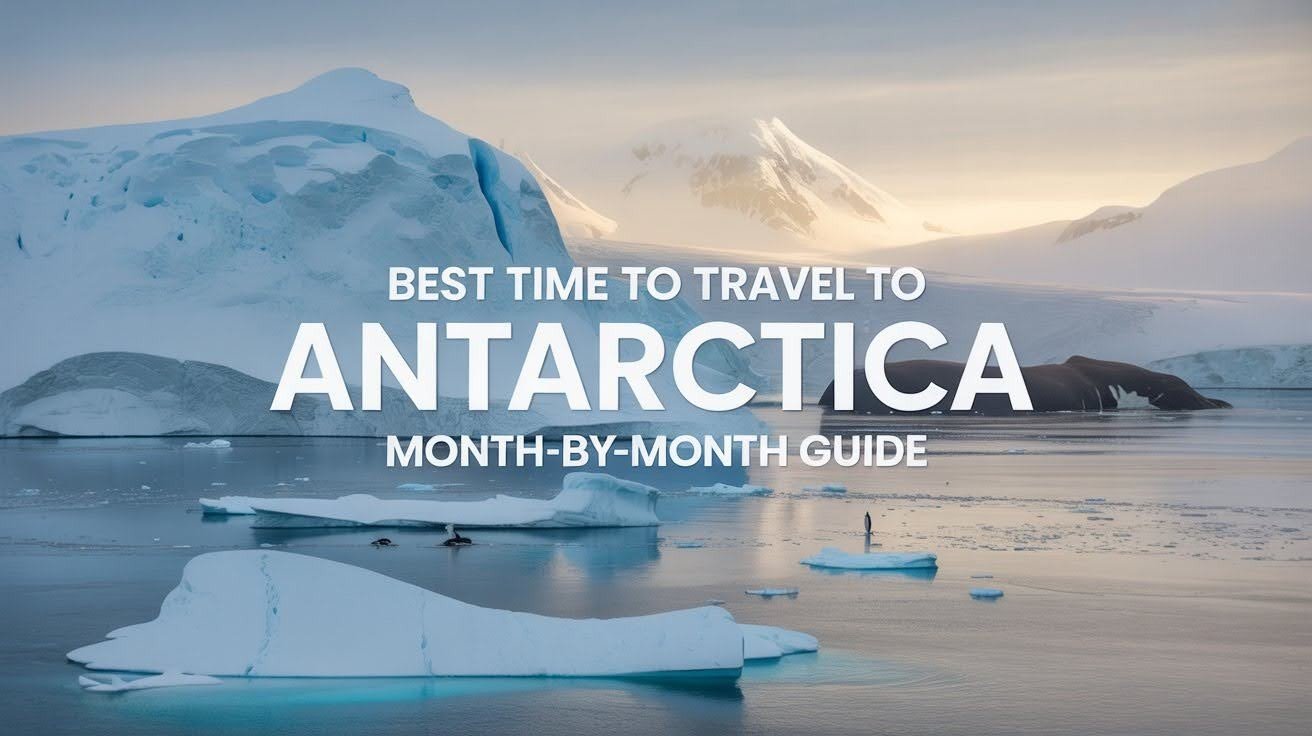
The Antarctic travel season runs from November through March. This is your only window to visit safely as sea ice melts enough for ships to pass through.
November kicks off the season when ice breaks up. December and January bring peak conditions with warmer weather and nearly 24-hour daylight. February offers open waters for reaching remote areas. March closes the summer as temperatures drop.
Summer temperatures range from 20°F to 50°F. November is coldest. December and January are warmest. Each month brings different wildlife. November shows penguin courtship.
December brings hatching chicks and arriving whales. January has active seal pups. February offers peak whale watching. March shows whales feeding before migration.
Understanding Antarctica’s Weather

Antarctica’s climate is extreme and unique. The continent shapes its own weather patterns through its massive ice sheet and position at the South Pole.
The sun dictates everything. Winter brings near-total darkness and dangerous temperatures. Summer reverses this with continuous daylight that warms the air and melts coastal ice.
Antarctica receives less than 2 inches of precipitation per year, making it technically a desert. The ice is ancient, built up over thousands of years.
Winter travel is deadly with temperatures below -60°F, locked sea ice, and constant darkness. Summer provides a small survivable window with temperatures above zero and 24-hour daylight. Even in summer, the weather changes fast. All visits happen on organized expeditions with experienced guides.
Antarctica Month-by-Month Guide
Here’s what each travel month offers. Pick based on what you want to see and do.
Antarctica in November

November marks the start of Antarctic summer. Fresh snow blankets the landscape in pure white. Ice is thick but breaking apart along the coast.
This is the best month for photography with pristine scenes. Snow is untouched by penguin activity. Ice formations are dramatic. The light is soft as the sun stays lower in the sky.
Penguins are courting. You’ll see them displaying, calling, and pairing up. Elephant seals are breeding on beaches. Males fight for territory while females gather in groups.
Temperatures are colder at 20-30°F. Some areas may be inaccessible due to ice. Fewer tourists visit, so sites feel more remote.
Antarctica in December

December brings warmer weather and longer days. Temperatures climb to 30-40°F. Nearly 24 hours of sunlight give you maximum time for activities.
Penguin chicks start hatching. You’ll see tiny gray chicks under their parents. Colonies become noisy as adults feed their young. Whales begin arriving as krill blooms. Orcas hunt along the ice edge. Humpback whales migrate in to feed.
December is popular with families due to holiday timing. The weather is more stable. More landing sites become accessible.
Antarctica in January

January is the warmest and busiest month. Temperatures peak at 30-45°F. This is the most comfortable time for outdoor activities.
Seal pups are born and nursing on beaches. Predators like leopard seals hunt along ice edges. Penguin chicks are growing rapidly, covered in fluffy down and constantly begging for food. Colonies are at their loudest and most active.
January is ideal for kayaking, camping, and longer hikes. Water conditions are calm for adventurous activities. Tourist numbers peak, so book early.
Antarctica in February

February offers the best access to remote areas. Sea ice is at its minimum, allowing ships to push further south.
Whale watching hits its peak. Humpbacks, minkes, and orcas are everywhere. They feed heavily before migration. You’ll have multiple sightings per day.
Historic sites become reachable as ice clears. Old whaling stations and explorer huts open up. Penguin chicks are starting to fledge, losing their down and growing adult feathers.
February weather remains warm and stable. It’s still busy but slightly less than January.
Antarctica in March

March is the end of the season. The sun starts dipping below the horizon, creating colorful sunsets and golden-hour light. Temperatures begin dropping.
Whales are feeding intensively before leaving for warmer waters. This is your last chance to see them. Grease ice starts forming on calm waters, creating interesting patterns.
Fewer tourists visit in March. Prices may be lower. You’ll have a more peaceful experience. Some operators offer last-minute deals.
Weather becomes less predictable. Storms can roll in suddenly. Some areas start becoming inaccessible as ice thickens.
When You Cannot Visit Antarctica

Most of the year, Antarctica is completely closed to tourism. Understanding why helps you appreciate the summer travel window.
From April through October, Antarctica enters winter. Temperatures drop to -20°F to -40°F on the Peninsula and -60°F or lower inland. Sea ice forms thick barriers that ships cannot break through.
Darkness dominates these months. The sun sets in March and doesn’t rise until September. Storms are constant with hurricane-force winds.
No commercial tourism operates during winter. Ships cannot reach the continent. Extreme cold causes equipment failure. Medical evacuation is impossible. Only scientific research stations remain occupied with staff committed to staying the entire winter with no way out.
Best Time to Travel to Antarctica for Wildlife
Your wildlife goals should guide your month choice. Each month offers different animal behaviors.
For penguin courtship, choose November. For chicks, December and January are ideal. Late February shows fledging behavior as chicks lose their down and take their first swims. Three penguin species are common: Gentoo, Chinstrap, and Adelie.
January and February are best for seals. Pups are born in January. Leopard seals hunt near penguin colonies in December and January. Elephant seals breed in November with males battling for dominance. Weddell seals are visible throughout the season.
February is the peak month for whales. Multiple species are feeding heavily. Humpback whales frequently breach. Orcas hunt in groups. January also offers excellent whale watching. December brings the first whales. March provides last-chance sightings before migration.
Conclusion
Picking your travel month comes down to your priorities. I’ve found that January offers the most reliable weather and active wildlife, but February gives you those whale encounters you won’t forget. November works if you want pristine landscapes and smaller crowds. Each month has its trade-offs.
Think about what matters most to you: is it seeing penguin chicks, whale watching, or getting perfect photos? Check the month-by-month details again, then book your expedition.
Have questions about timing your trip? Drop a comment below and let’s figure out the best month for your Antarctica visit.
Frequently Asked Questions
Can you visit Antarctica year-round?
No, only November through March during Antarctic summer. Winter brings extreme cold, total darkness, and impassable ice that blocks all ship access.
What is the warmest month in Antarctica?
January is warmest with temperatures reaching 30-45°F along the coast. It’s the most comfortable time for kayaking, hiking, and camping activities.
When is the best time to see penguins in Antarctica?
December and January are best for penguin chicks. November shows courtship behavior. Late February displays fledging as chicks head to water.
How long does it take to get to Antarctica?
From Ushuaia, it takes 2 days by ship across the Drake Passage. Flying from Punta Arenas takes about 2 hours to King George Island.
Is it expensive to visit Antarctica?
Yes, cruises typically cost $8,000 to $15,000 per person for 10 days. Longer trips cost more. Flights to South America are extra.